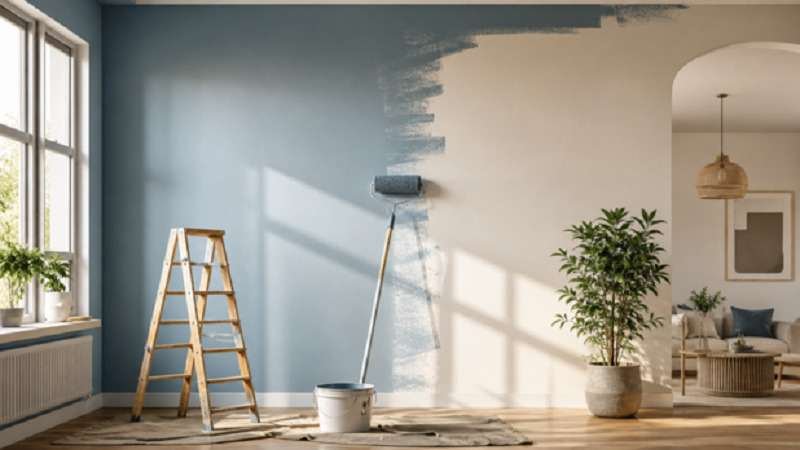
You enter your house with hopes of having a comfortable time, but there is something that feels a bit off. The walls appear lifeless, the lighting does not reflect as it should, and the space feels more claustrophobic or oppressive. You attempt to rearrange furniture, add decorations, or replace lighting fixtures. Nevertheless, the mood does not completely change. That feeling of disconnection is frequently caused by the single thing that encompasses everything- your walls.
Color, texture, and finish silently influence the way a room will feel daily. When they are old-fashioned, battered, or ill-fitting, the whole area lacks its clear and vibrant authenticity. Conversely, the right application of paint can immediately reset the tone of a room, making it feel more in balance, functional, and welcoming.
This article discusses the way interior painting can make you feel better and redefine your space through a series of practical, insight-driven changes.
1. Color Directly Influences Mood and Emotional Response
When you enter a room, the first thing that your mind processes is color. Your brain responds to tones, brightness, and contrast even before you consciously start to examine the space. The response influences the way you feel, whether you are calm, focused, energized, or distracted.
With interior painting, you’re not just updating walls; you’re actively designing the emotional environment of your home.
Indicatively, pleasantly neutral colors like warm whites, light greys, and beige colors provide a relaxing and balanced effect. These colors can be used in residential places where one wants to feel like there is an open area with no form of distraction. In the meantime, cool colors such as muted blues and greens help in relaxing, and therefore they should be used in bedrooms or sitting rooms.
Meanwhile, warmer colors like soft terracotta or soft yellows can bring warmth and comfort, particularly in those places where you are meeting with others. But when bold or saturated colors are not used in balance with other colors, the space may be overloaded, leading to the space feeling smaller or visually stressed.
Due to this, the choice of colors cannot be made solely on the basis of personal preference. You need to consider:
- Amount and direction of natural light
- Size and shape of the room
- Existing furniture, flooring, and textures
2. Paint Can Visually Expand or Refine Your Space
Although the layout of your house may not change, paint can change the perception of space. In other words, it has the ability to make a room look bigger, brighter, or more organized without physically renovating the room.
To begin with, lighter colors reflect more light. This reflection gives the effect of an open and airy room, which is particularly handy in a small room or area with little natural lighting. Darker colors, on the other hand, can add depth and contrast when used strategically, contributing a touch of sophistication to larger areas.
Moreover, the uniform flow of color across rooms enhances visual flow. The space may also seem disjointed when the tone of each room is radically different and non-transitional. When colors, however, complement each other, the home would feel more connected and thoughtfully designed.
Another important parameter is the surface condition. The walls with uneven surfaces, cracks, or old finishes may disrupt the interaction of light with the room. This makes the space look older or not well-maintained.
Proper surface preparation, including smoothing of imperfections or renewing of textures, helps apply the paint evenly. Consequently, the end finish appears clean, modern, and cohesive.
3. Fresh Walls Reinforce Cleanliness and Reduce Visual Clutter
Signs of everyday life gradually accumulate naturally on walls over time. Scuff marks, small stains, fading spots, small dents, and others all accumulate gradually. Although each blemish might appear as a small detail, when combined, they form the impression of visual noise.
It is here that repainting can have an effect.
A new layer of paint erases those accumulations and brings back sanity to the place. Clean and even-toned walls help create a background that is well-organized and purposeful. This is particularly evident in high-traffic sites like hallways, kitchens, and living rooms.
In addition, contemporary paint solutions have better wearability. Many finishes are designed to resist stains and allow for easier cleaning. This means your walls maintain their appearance for longer, even with regular use.
Moreover, low or zero-VOC paint choices can help improve indoor air quality. This is especially critical in enclosed areas where ventilation might be restricted.
As these enhancements are incorporated, your home will start to feel lighter not only physically, but also in regard to maintenance and comfort.
4. Quality Execution Determines Long-Term Results
While color selection is important, the durability and overall look of a paint job depend heavily on execution. Without proper preparation and technique, even the best paint can result in uneven coverage, premature wear, or visible flaws.
A structured painting process typically includes:
- Thorough cleaning of surfaces
- Repairing cracks, dents, and imperfections
- Priming surfaces for better adhesion
- Applying a consistent, even coats
Each step contributes to the final outcome. Skipping preparation, for instance, often leads to peeling or patchy finishes over time.
Conclusion
When a space feels disconnected or uninspiring, the solution isn’t always adding more elements. In many cases, it’s about refining the foundation of the space itself.
Walls define the backdrop of every room. When they’re outdated, damaged, or poorly aligned with the rest of the interior, everything else feels slightly out of place. However, when updated thoughtfully, they bring clarity, balance, and renewed energy.
Interior painting offers a direct and effective way to achieve that shift. It influences mood, enhances spatial perception, improves cleanliness, and supports long-term comfort.
With the right approach, it becomes more than a cosmetic change. It becomes a strategic upgrade that reshapes how your space looks, feels, and functions every single day. See more at: https://ftasiastock.com/